In the industry, a floor is much more than just a surface for circulation. It must withstand repeated traffic, impacts, abrasion, chemicals, and sometimes temperature variations. Depending on the activity, it must also facilitate cleaning, limit dust, and allow for quick re-service.
🏭 Production workshops, logistics warehouses, loading docks, industrial parking lots, or food processing facilities: each environment imposes its own requirements.
To meet these constraints, Maestria offers paints and coating systems for industrial floors, with solutions tailored to surface preparation, repair, and protection.
At Couleurs d’Argence in Lunel, we help you identify the products to study based on your medium, your activity, and the desired performance.
🔎 Our goal: to help you choose a solution suited to your industrial floor and the real constraints of your site.
🧱 1. Preparing the industrial floor: an essential step
Before applying paint or resin, it is essential to assess the condition of the substrate. A porous concrete, an old resin that is still adhering, or a degraded screed do not necessarily require the same preparation.
A high-performance system starts with a properly prepared substrate. This step directly contributes to the adhesion and durability of the coating.
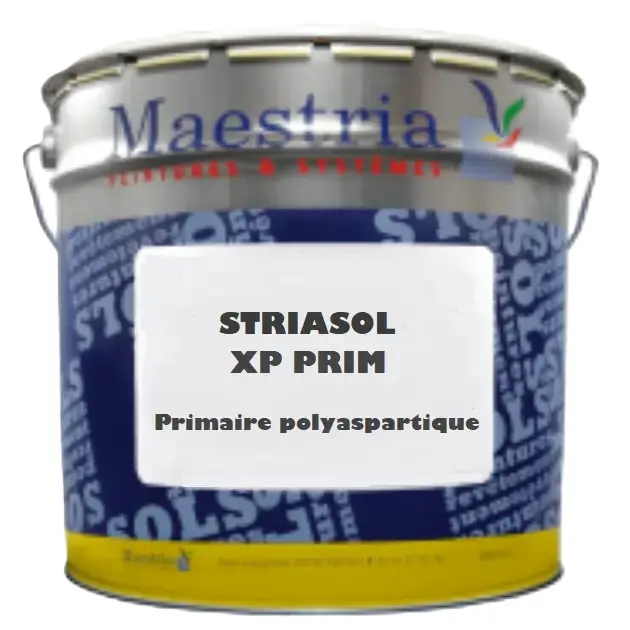
⚡ STRIASOL XP PRIM : prepare certain porous concretes
Le STRIASOL XP PRIM est un primaire polyaspartique ultra rapide bicomposant destiné notamment aux sols en béton poreux de parkings, d’entrepôts, de quais de chargement et de locaux industriels.
It helps to strengthen and seal porous substrates while promoting the adhesion of the coating system. It may also be suitable for certain old epoxy or polyaspartic bases, provided that proper preparation is carried out and the manufacturer's recommendations are followed.
Its advantage: a possible overcoat after 3 hours at 20 °C and 60% relative humidity, according to the conditions specified in the technical data sheet.
✅ For professionals who need to minimize the downtime of their premises, this speed of recovery can facilitate the organization of the construction site.
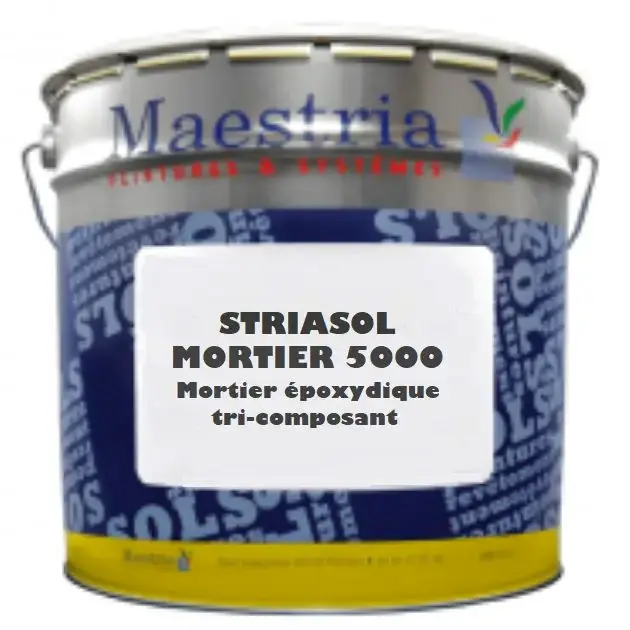
🛠️ STRIASOL MORTIER 5000 : repair degraded concrete floors
Potholes, worn screeds, holes, or level differences: a damaged floor must be repaired before finishing.
Le STRIASOL MORTIER 5000 is a solvent-free, three-component epoxy mortar designed for the repair of industrial floors.
It notably allows :
- to renovate degraded cement or concrete screeds ;
- to repair potholes ;
- to create slope shapes and gorges ;
- to carry out certain repairs with a thickness greater than 10 mm.
Its mechanical resistance and compatibility with the epoxy or polyurethane finishes planned in the flooring range make it a solution worth considering for technical renovation operations.
💡 Site advice: the repair must be carried out on a sound and properly prepared substrate. The choice of any primer depends on the nature of the concrete and the recommendations of the chosen system.
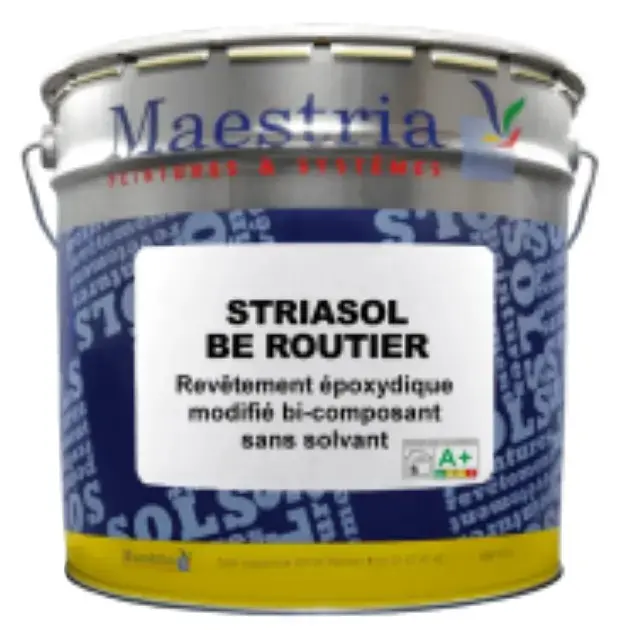
🚧 STRIASOL BE ROUTIER : protect highly stressed surfaces
Some surfaces and outdoor structures undergo significant stresses: braking, repeated passage of vehicles, abrasion, or exposure to de-icing salts.
The resin STRIASOL BE ROUTIER is a modified two-component epoxy resin, solvent-free, designed for the protection and securing of bridges, roads, walkways, curves, loading docks, and braking zones.
It has good resistance to abrasion and de-icing salts. Depending on the application, it can serve as a primer, a base coat, or a finish. A slip-resistant surface can also be achieved by incorporating suitable aggregates.
It can be applied to various substrates, including concrete, steel, and certain coatings, after appropriate preparation.
⚠️ Point of caution: the system must be chosen based on the substrate, expected traffic, and the desired slip-resistant performance.
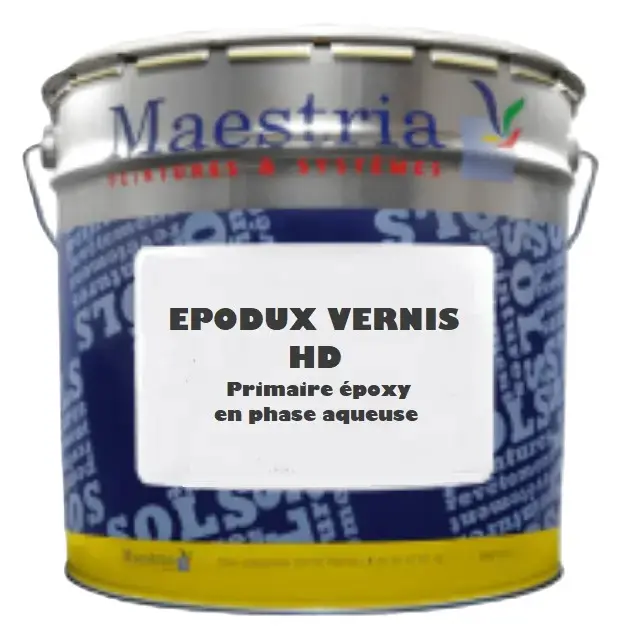
💧 EPODUX VERNIS HD : impregnate and secure the concrete supports
Le EPODUX VERNIS HD is a colorless, water-based two-component epoxy primer for the preparation and protection, particularly of concrete substrates.
It helps improve the adhesion of compatible systems and can be used to secure concrete floors in the industry. It is also intended for certain technical structures, including tanks and reservoirs, according to the usage conditions specified by the manufacturer.
Its low odor can be an advantage in environments where application constraints must be considered.
💡 Note: EPODUX VERNIS HD is not a conventional decorative finish. Its role is that of a penetrating primer: it must be integrated into a compatible system and applied according to its technical data sheet.
🎨 2. What finish to choose for an industrial floor?
Once the substrate is prepared and repairs are completed, the choice of finish depends on the activity of the space, mechanical and chemical stresses, exposure to light, and cleaning constraints.
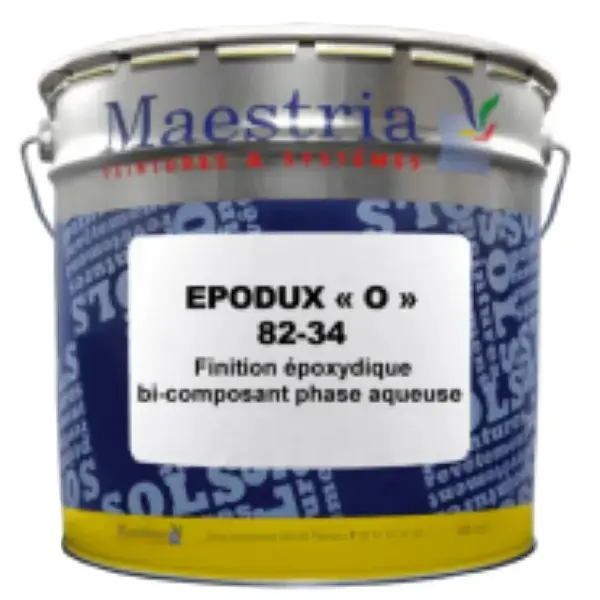
🏭 EPODUX O 82-34 : for sensitive industrial environments
The painting EPODUX O 82-34 is a two-component water-based epoxy paint designed for the protection of floors and walls in demanding industrial environments.
It is particularly suited for certain sensitive environments, confined spaces, or those subjected to strong chemical and mechanical constraints, including nuclear facilities, thanks to its decontaminable properties and the EDF approval mentioned on its product sheet.
Its hard and dust-repellent film offers good mechanical and chemical resistance. Its water-based formulation and low odor are advantages for areas where application conditions are particularly important.
His strengths :
- ✔️ Protection of floors and walls ;
- ✔️ Good mechanical and chemical resistance ;
- ✔️ Hard and dustproof film ;
- ✔️ Faint smell ;
- ✔️ Decontaminable properties for the relevant applications.
This solution is aimed at professionals looking for a technical coating for specific industrial environments. Site-specific requirements and compatibility with the substrate must always be verified.
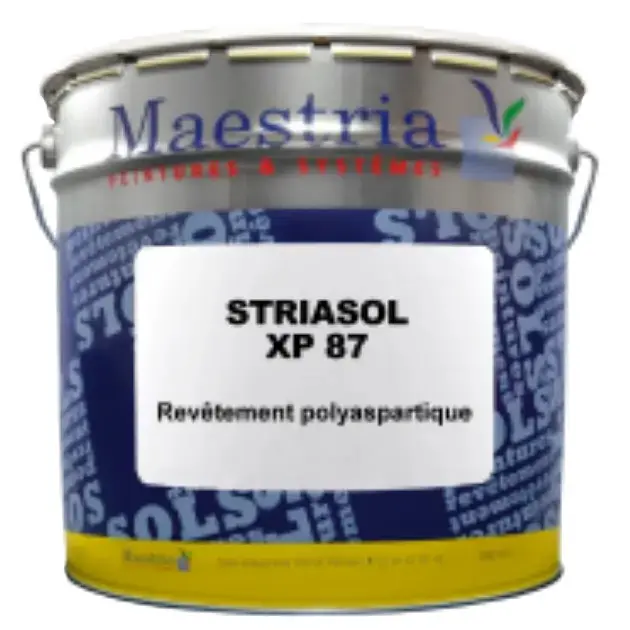
⚡ STRIASOL XP 87 : a fast-drying polyaspartic solution
Le STRIASOL XP 87 is a high-performance polyaspartic coating designed for outdoor industrial floors, parking lots, and traffic areas.
It specifically addresses projects where the speed of execution and the restoration of the ground are important criteria.
This type of coating may interest professionals looking for a solution for traffic areas and outdoor spaces subject to operational constraints. However, the choice of system must take into account the condition of the substrate, traffic, weather conditions, and the actual desired downtime for service restoration.
💡 Professional advice: a quick drying does not exempt from respecting the coverage and service restoration times specified in the technical data sheet. These timelines depend on the actual conditions of the site.
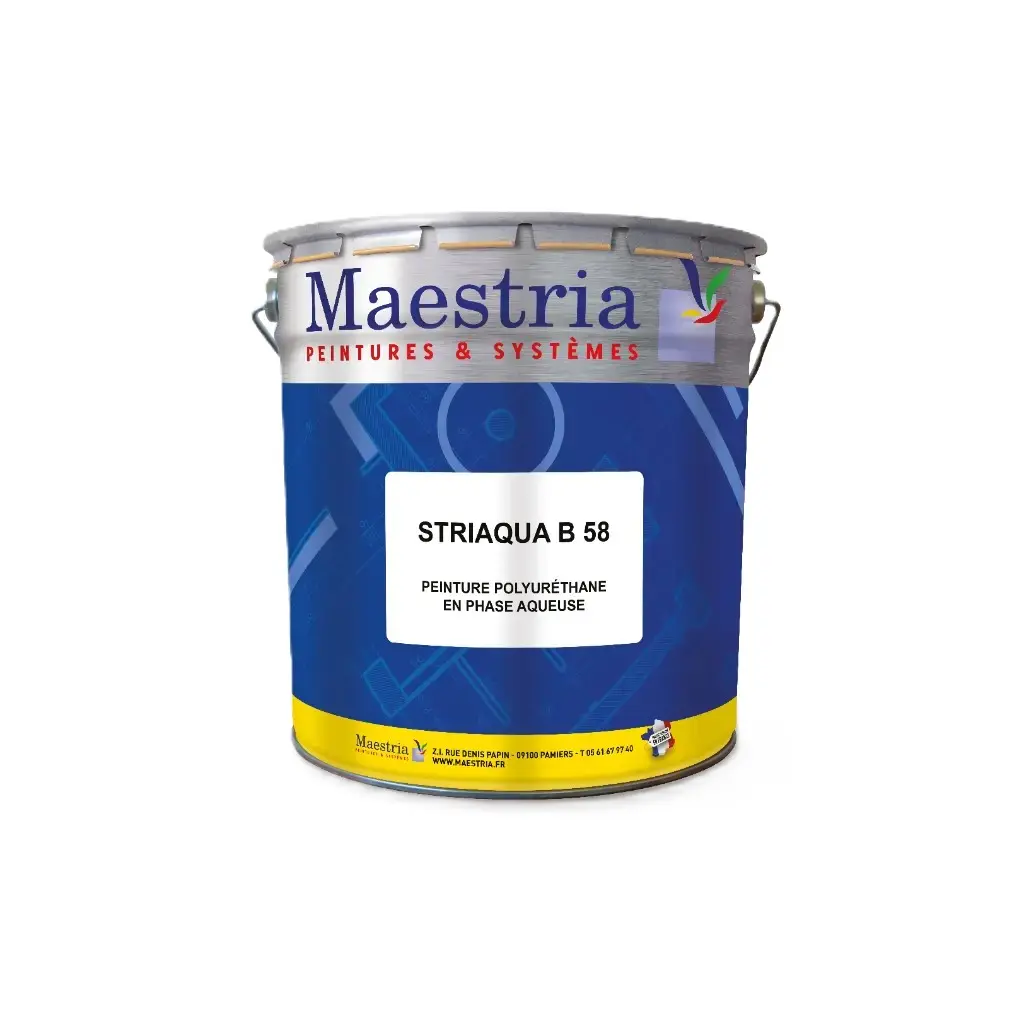
💧 STRIAQUA B 58 : a water-based polyurethane paint
La STRIAQUA B 58 is a water-based two-component polyurethane paint, designed for the protection and decoration of floors and walls in industrial and technical environments.
It may interest professionals looking for a low-odor solution, particularly in environments where the use of solvent-based products is impossible or regulated.
Its film exhibits good mechanical performance, strong resistance to abrasion and chemical attacks, as well as good UV stability. It is also non-yellowing.
Why study it for your project?
- ✔️ Application on floors and walls ;
- ✔️ Aqueous phase formulation with low odor ;
- ✔️ Good abrasion resistance ;
- ✔️ Good chemical resistance ;
- ✔️ UV resistance and non-yellowing properties ;
- ✔️ Dust-repellent effect.
The preparation of the substrate and the choice of the primer remain crucial to ensure the durability of the system over time.
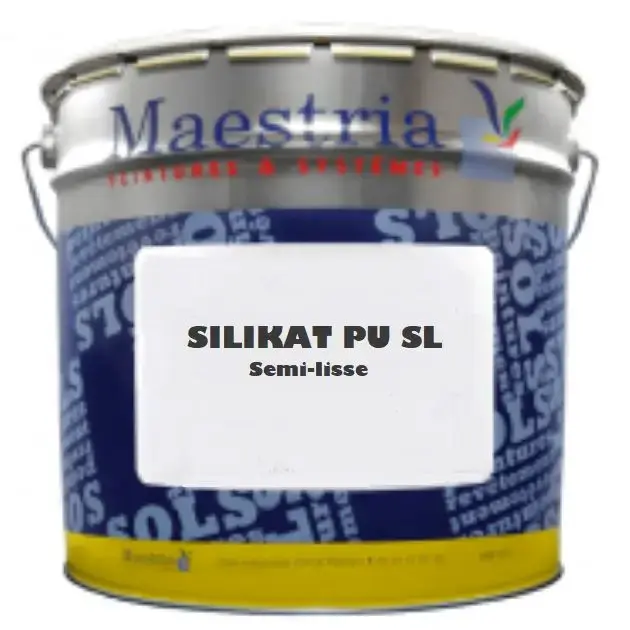
🧪 SILIKAT PU SL : for soils subjected to high stresses
In certain industries, traditional paint is not enough. Floors can be subjected to significant mechanical, chemical, and thermal stresses, with high maintenance requirements.
Le SILIKAT PU SL is a semi-smooth polyurethane-cement coating, made of three components, applied at a thickness of 3 to 6 mm.
It is designed for indoor floors subjected to severe constraints, particularly in the food processing, chemical, and pharmaceutical industries, professional kitchens, workshops, and storage areas.
Its monolithic joint-free structure makes maintenance easy. The product offers resistance to abrasion, numerous chemical aggressions, and temperature variations.
Its advantages :
- ✔️ Semi-smooth coating of 3 to 6 mm ;
- ✔️ Good mechanical and chemical resistance ;
- ✔️ Resistance to temperature variations ;
- ✔️ Seamless monolithic surface ;
- ✔️ Dust-repellent effect ;
- ✔️ Facilitated interview.
💡 To remember: SILIKAT PU SL is a technical solution for particularly demanding floors. The texture and system must be adapted to the site's constraints, especially in wet areas where the safety of movement is essential.
📊 3. Which product to study according to your needs?
Here is a first marker to guide your research :
| Your need | Product to study |
| Prepare a porous concrete with a rapid cover | STRIASOL XP PRIM |
| Repairing damaged concrete or potholes | STRIASOL MORTIER 5000 |
| Protect road areas and structures subjected | STRIASOL BE ROUTIER |
| Soak and secure a concrete support | EPODUX VERNIS HD |
| Protecting floors and walls in sensitive industrial environments | EPODUX O 82-34 |
| Search for a polyaspartic coating | STRIASOL XP 87 |
| Protect and decorate floors and walls with a water-based polyurethane | STRIAQUA B 58 |
| To create a technical coating for a floor subjected to high constraints | SILIKAT PU SL |
This selection serves as a first reference. The most suitable product always depends on the condition of the substrate, the operational constraints, and the complete system chosen.
🔧 4. Why reason in terms of a system rather than an isolated product?
The durability of an industrial floor does not depend solely on the finishing paint. An appropriate coating must be chosen taking into account the preparation of the substrate and the various stages of the project.
A successful construction project generally relies on several complementary stages :
- Diagnose the substrate: nature of the concrete, porosity, cohesion, moisture, and possible presence of an old coating.
- Prepare the surface: appropriate cleaning and mechanical preparation to eliminate non-adherent parts and promote adhesion.
- Repair defects: filling, restoring degraded areas, or correcting levels when necessary.
- Choose the appropriate primer: based on the substrate and the intended finish.
- Apply the coating: adhere to the dosages, application conditions, overlap times, and prescribed thicknesses.
- Adhere to the specified time frame before returning to service: do not confuse surface drying with the hardening required to withstand the anticipated loads.
⚠️ Important : the products mentioned in this article do not automatically form a single, mutually compatible system. Before combining them, check the manufacturer’s specifications and the technical data sheets for each individual item.
🔗 Also check out our other article : Floor paints: paints suited to every project.
You can also find the available products in our industrial flooring systems category.
👉 Discover the range : Industrial floors
🏭 Couleurs d’Argence in Lunel: professional solutions for your industrial flooring
Every industrial floor has its own specific characteristics. Making the right choice is not simply a matter of selecting a durable paint; it involves identifying a solution that is compatible with the substrate, the operating conditions, and the constraints of the site.
At Couleurs d’Argence in Lunel, we guide you in selecting professional-grade Maestria paints and coatings tailored to your projects.
👉 Need to identify a solution for your industrial flooring? Contact Couleurs d’Argence to discuss your project and the products to consider.
📍 Couleurs d’Argence – Lunel
🎨 Professional Maestria paints for industry, flooring, and technical surfaces.
❓ FAQ - Industrial Floor Paint
Which paint should be chosen for an industrial floor subject to heavy traffic?
The choice depends on the type of traffic, the condition of the substrate, and site constraints. A primer such as STRIASOL XP PRIM can help prepare certain porous concrete surfaces, while the finish should be selected based on the expected mechanical and chemical stresses, as well as the required turnaround time for returning the area to service.
Is it always necessary to apply a primer before an industrial floor coating?
The choice of primer depends on the nature and condition of the substrate, its porosity, and the selected finish. The manufacturer’s recommendations must be followed to ensure the compatibility and adhesion of the system.
How do you repair an industrial concrete floor before painting it?
Damaged areas must be repaired using a product suited to the nature and scale of the defects. STRIASOL MORTIER 5000 is specifically designed for potholes, damaged screeds, and certain repairs exceeding 10 mm in thickness. Proper surface preparation beforehand remains essential.
What is the difference between epoxy paint, polyurethane paint, and a polyaspartic coating?
These families exhibit different characteristics. Epoxies, for instance, are used for their adhesion as well as their mechanical and chemical resistance. Depending on their formulation, polyurethanes can offer good UV resistance. Polyaspartics are valued, among other reasons, for their rapid drying time. The choice always depends on the specific application and the complete system.
Which flooring should be chosen for a food industry facility?
Mechanical stresses, cleaning agents, chemical exposure, temperatures, and hygiene requirements must all be taken into account. SILIKAT PU SL is a solution worth considering for certain indoor floors subject to heavy use. The chosen system must be validated against the specific requirements of the site.
Can an industrial floor be put back into service quickly after application?
Some products are designed to allow for quick recoating or a rapid return to service. However, timeframes vary depending on the specific product, temperature, humidity, applied thickness, and anticipated service conditions. It is essential to consult the technical data sheet before planning the resumption of operations.