🎨 You want to repaint a wall or a ceiling and you are wondering :
"Do I need an underlayment? And above all, which one should I choose ?"
That's a very good question !
A primer, also called an undercoat or base coat depending on its function, is generally applied before the finishing paint.
But be careful : not all underlayers serve the same purpose.
Some simply prepare a wall before painting it. Others are specifically designed for drywall, porous surfaces, wood, difficult surfaces, or even stains.
👉 The right choice therefore depends primarily on your support and the problem you need to solve.
🧐 What is the purpose of an underlayment ?
A sublayer can have several functions :
✅ improve paint adhesion
✅ standardize the substrate absorption
✅ prevent certain areas from "absorbing" more paint than others
✅ improve the quality of the finish
✅ set or consolidate certain funds
✅ facilitate the application of paint
✅ block certain tasks before completion
✅ allow the paint to last better over time
💡 But a primer is not automatically necessary in all cases. You must first consider the nature of the surface, its condition, and the paint you wish to apply.
👉 Also check out our article "How to Paint a Previously Painted Wall? Preparation, Choosing the Paint, and Mistakes to Avoid"
🔎 The question to ask is: what is your medium ?
To help you find your way, here is the simplest :
🏡 You have a classic interior wall or ceiling ?
➡️ AQUASOFT PRIMAIRE
➡️ AQUASTRIA PRIMAIRE
➡️ AQUALYS PRIMAIRE
🧱 You have drywall / gypsum board ?
➡️ IMPRESSION PLACO
🌱 You are looking for a very low emission print ?
➡️ DECONATURE IMPRESSION
🌻 You are looking for a bio-based print ?
➡️ OLEO PRIMAIRE
🏗️ Your support is very porous or needs to be consolidated ?
➡️ IKARFIX O
🪓 You have wood, plaster, or some old supports ?
➡️ IKARPRIM
⚙️ Your surface is difficult to paint: PVC, metal, wood...?
➡️ MULTIFACE HYDRO
🚬 Your wall has stains that may stand out ?
➡️ NORWAY
👉 See the range of Primer Adhesives
🎨 1. AQUASOFT PRIMAIRE
A versatile paint for walls and ceilings
You have walls or ceilings to prepare before their finishing paint ?
AQUASOFT PRIMAIRE is a multi-surface print intended for new construction and renovation, particularly in dry and wet areas.
It notably allows for :
✅ prepare the support
✅ improve the adhesion of the finish
✅ standardize the background
✅ improve the opacity
✅ prepare certain former member funds
It can particularly be used on various interior substrates depending on the painting system: drywall, coatings, plaster, old adhering paints, and certain woods.
👉 Why choose it ?
Because you are looking for a versatile primer to properly prepare an interior surface before finishing.
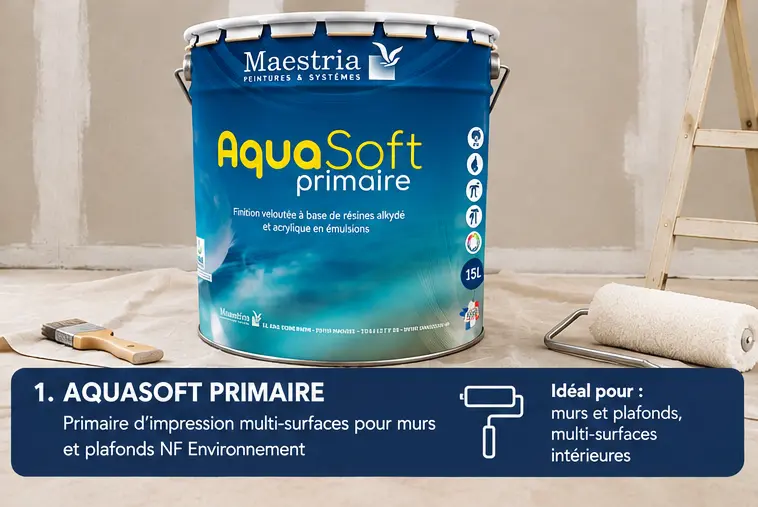
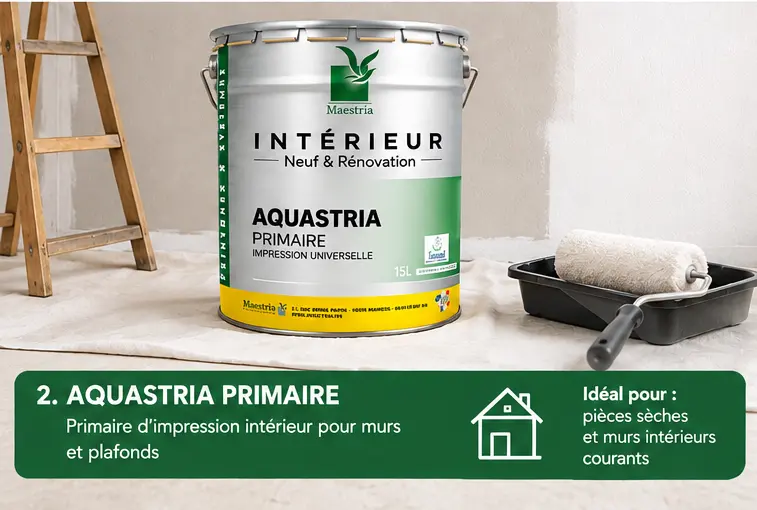
🏡 2. AQUASTRIA PRIMAIRE
For the walls and ceilings of dry rooms
AQUASTRIA PRIMAIRE is intended for new construction and renovation work on the walls and ceilings of dry rooms.
It notably allows for :
✅ to set the funds
✅ improve grip
✅ standardize absorption
✅ prepare the surface before finishing
👉 Why choose it ?
If you need to prepare a wall or ceiling in a bedroom, living room, office, or another dry room, AQUASTRIA PRIMAIRE may be a suitable solution depending on the substrate and the finishing system.
🌿 3. AQUALYS PRIMAIRE
A low-emission printing for dry parts.
AQUALYS PRIMAIRE is a primer designed for the walls and ceilings of dry rooms, both in new construction and renovation. It offers good adhesion and opacity while facilitating the application of the finish.
👉 Why choose it ?
To prepare the walls and ceilings of a dry room when you are looking for a low-emission paint that is easy to apply and cover. It also has an eco-label.
🔗 AQUALYS PRIMAIRE 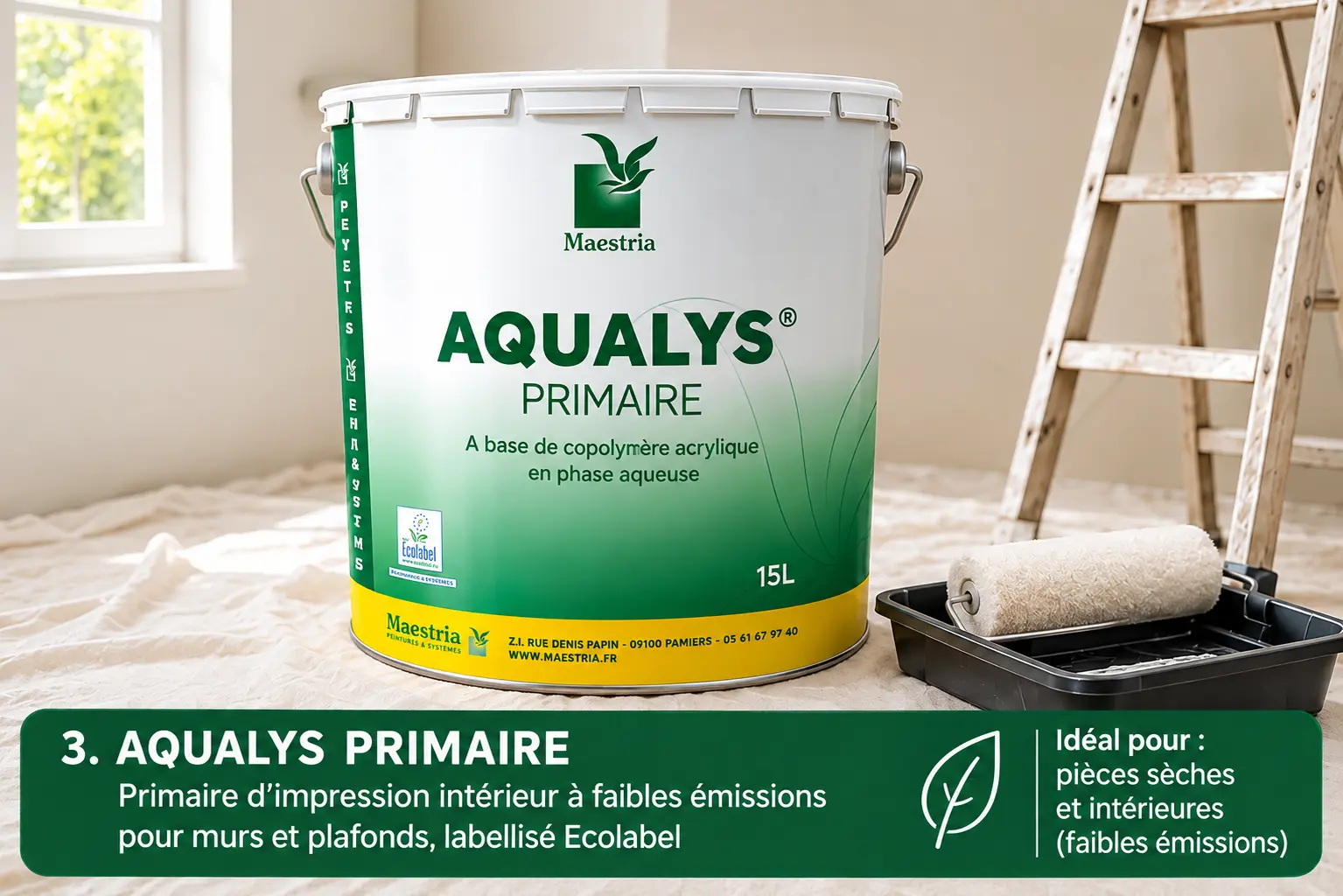
🧱 4. IMPRESSION PLACO
The underlayment specifically designed for drywall
This is where a real distinction must be made. When you have drywall, you should not just randomly choose an undercoat.
IMPRESSION PLACO is specially formulated for drywall surfaces. It is suitable for new or old substrates that are in good condition and low porosity.
It notably allows for :
✅ regulate the absorption of drywall
✅ improve the adhesion of the finish
✅ obtain a more uniform background
✅ facilitate the application of the paint
✅ avoid differences in appearance between the panel and the joint strips
It is particularly important on a drywall partition or ceiling: the joint tape and the board's paper do not necessarily absorb paint in the same way.
Without proper preparation, this can cause appearance differences known as "ghosting" after painting.
Another advantage: IMPRESSION PLACO has the European Ecolabel, an A+ rating, and a very low VOC content.
👉 Why choose it ?
If you have just installed drywall and are preparing the walls or ceilings before the final paint, this is precisely the type of surface for which this primer was designed.
⚠️ Attention : if the support is stained, the system rather suggests NORWAY or IKARPRIM.
🔗 🔗 IMPRESSION PLACO 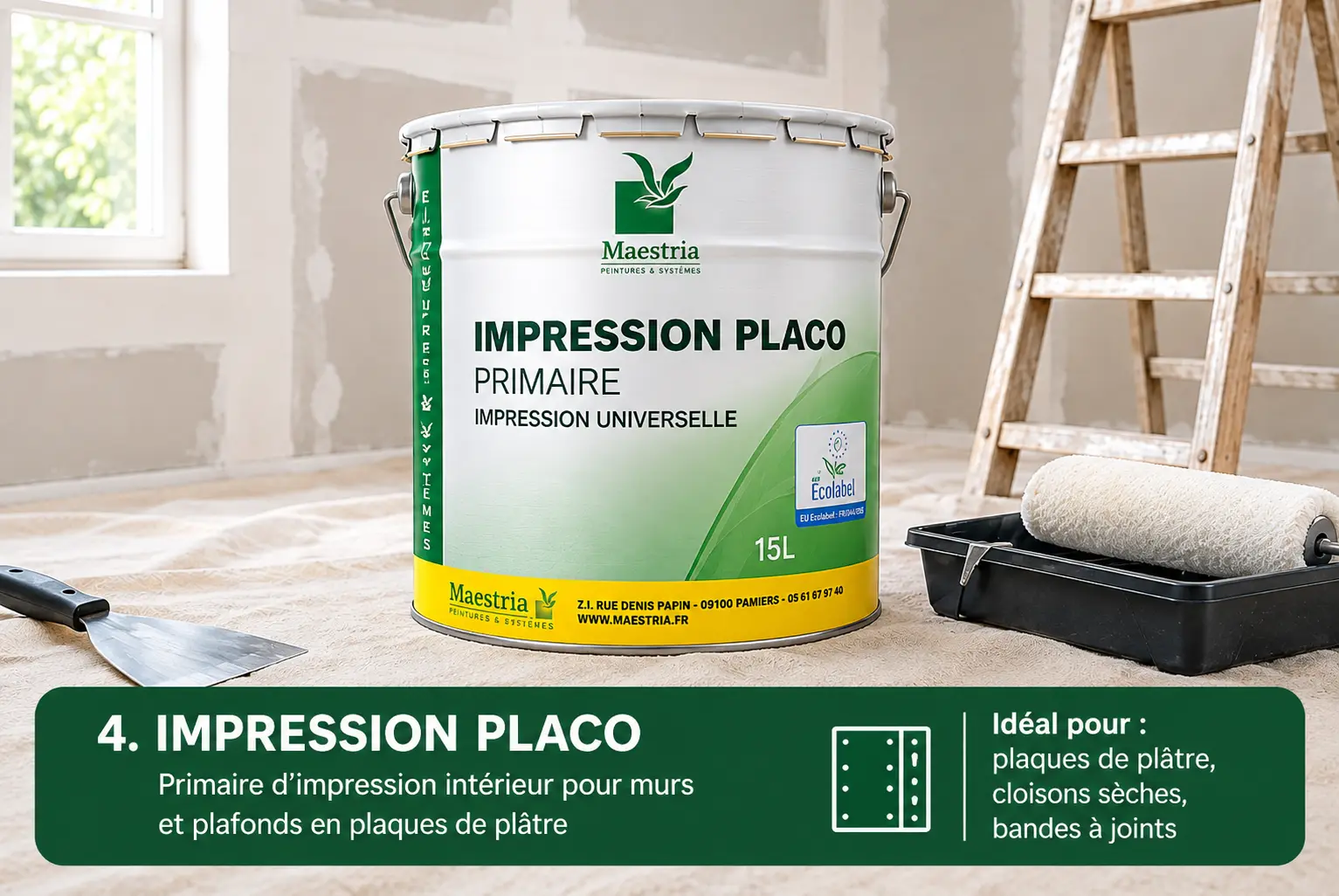
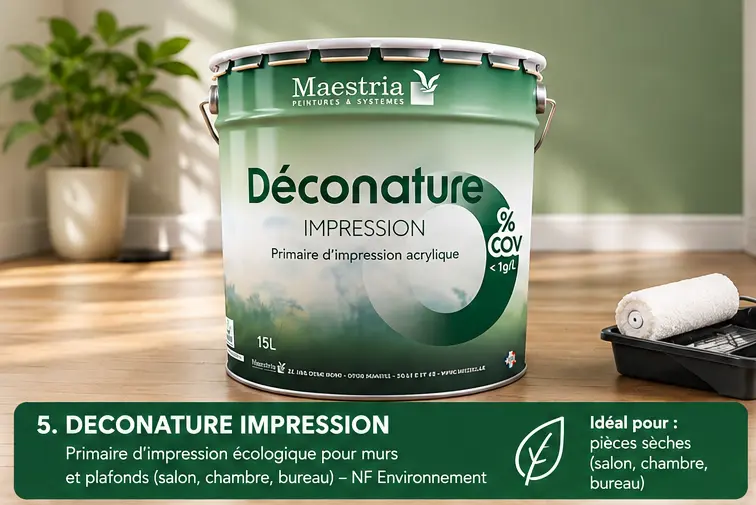
🌱 5. DECONATURE IMPRESSION
To prioritize very low VOC emissions
DECONATURE IMPRESSION is intended for the walls and ceilings of dry rooms. Its particularity is its very low level of VOC emissions in indoor air. It can therefore be particularly interesting for projects where indoor air quality and environmental requirements are of significant importance.
It is particularly suited for environmental approaches such as HQE, LEED, or BREEAM.
👉 Why choose it ?
When you want to prepare your walls and ceilings with a low-emission paint that is part of an environmental approach.
🌻 6. OLEO PRIMAIRE
A bio-based print for walls and ceilings
OLEO PRIMAIRE is distinguished by its formulation based on vegetable oil. It is intended for the walls and ceilings of dry and wet rooms, in new construction as well as in renovation.
It offers in particular :
✅ excellent grip
✅ a good covering power
✅ a good stretch
✅ a low emission
✅ an application suited for busy environments
👉 Why choose it ?
When you are looking for a paint for walls and ceilings with a bio-based formulation.
🔗 🔗 OLEO PRIMAIRE 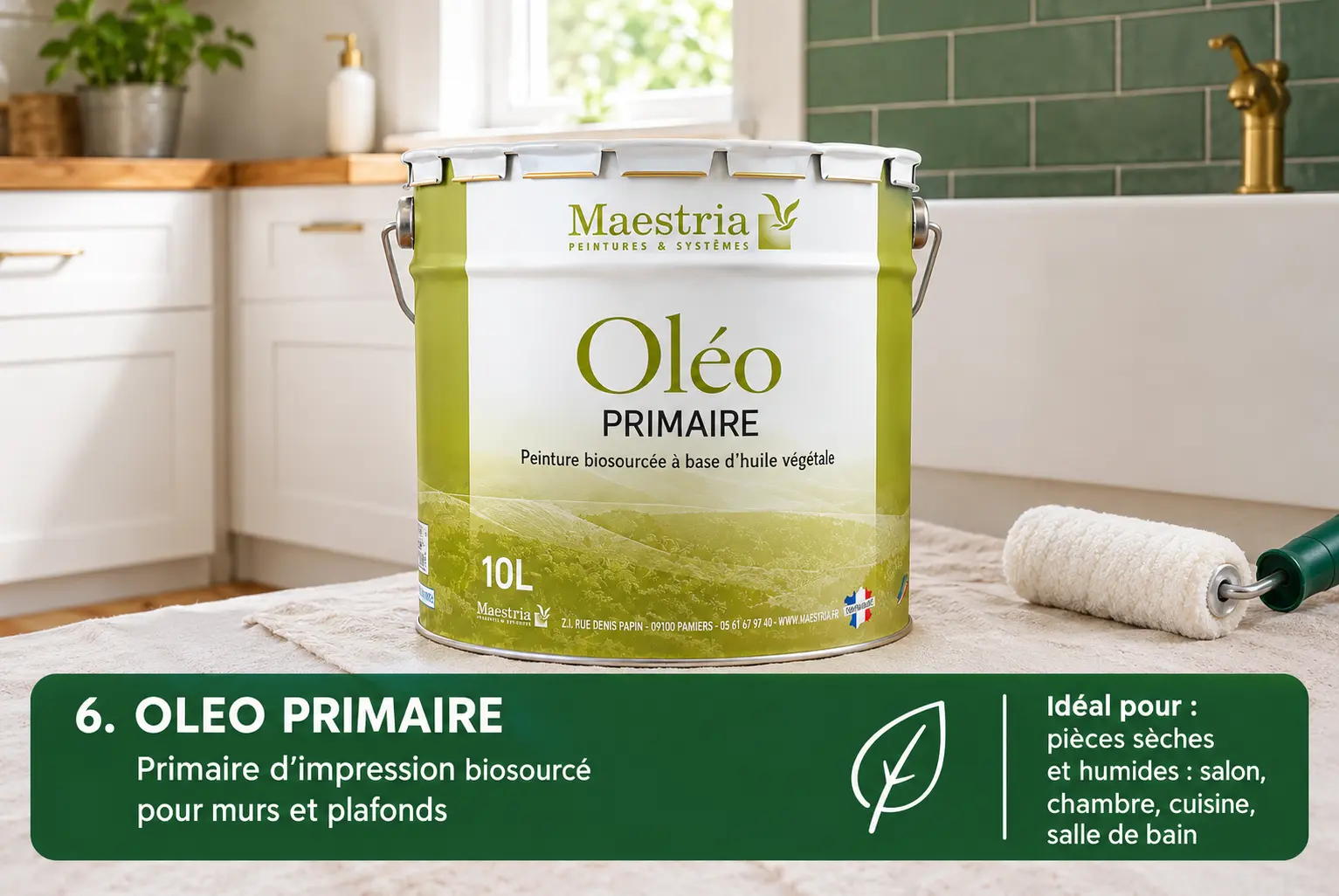
🏗️ 7. IKARFIX O
When the substrate is porous. Here, an important distinction must be made.
IKARFIX O is not just a classic impression. It is a micro-granite primer. Its role is particularly to prepare and consolidate certain porous substrates before finishing.
It can notably be used on :
🏗️ concrete
🏗️ cement coatings
🏗️ plaster
🏗️ supports porous minerals
👉 Why choose it ?
Imagine a wall that absorbs a lot of water: when you apply the paint, it is immediately "soaked up" by the surface.
In this case, you must first prepare the background properly. This is where a background fixer like IKARFIX O may be necessary.
💡 To remember
Impression = prepare the substrate before finishing
Fixative = to treat a surface that notably has a problem with porosity or cohesion.
So it's not exactly the same function.
🔗 🔗 IKARFIX O 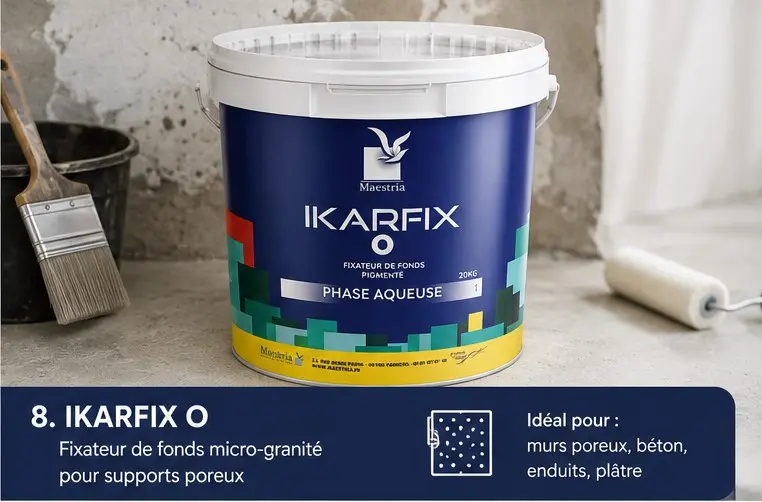
🪓 8. IKARPRIM
For certain media that require specific preparation.
IKARPRIM is a universal solvent-based primer, particularly intended for wood, plaster, coatings, and certain compatible old substrates. It has a hardening and penetrating action.
It can therefore be interesting when the surface requires more specific preparation than a simple common wall.
🌳 And for the wood ?
Some woods may exhibit tannin bleed that could penetrate the finish paint.
The choice of primer is therefore particularly important. Depending on the substrate and the finishing system, IKARPRIM or NORWAY can be specifically recommended.
👉 Why choose it ?
When the substrate requires a penetrating, hardening primer—particularly on certain types of wood, plaster, or old surfaces.
🔗 IKARPRIM 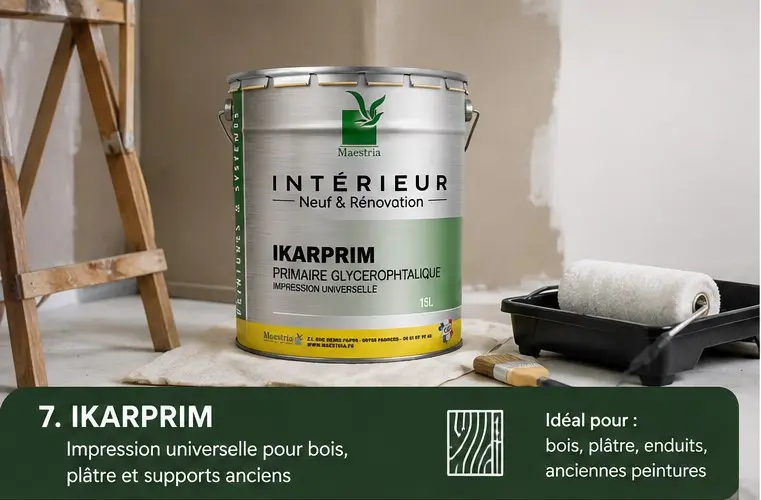
⚙️ 9. MULTIFACE HYDRO
For surfaces that are difficult to paint
A plaster wall cannot be compared to PVC or metal. Some surfaces are much more difficult to bond to.
This is particularly the case for :
⚙️ certain metals
🪓 wood
🔧 previously painted surfaces
🏗️ substrates requiring special adhesion
MULTIFACE HYDRO is a universal multi-substrate primer designed notably to improve adhesion to this type of substrate.
👉 Why choose it ?
When your main problem is paint adhesion on a difficult substrate.
💡 The goal here is not simply to make the wall's absorption uniform; above all, it is to ensure the finish adheres properly to the substrate.
🔗 🔗 MULTIFACE HYDRO 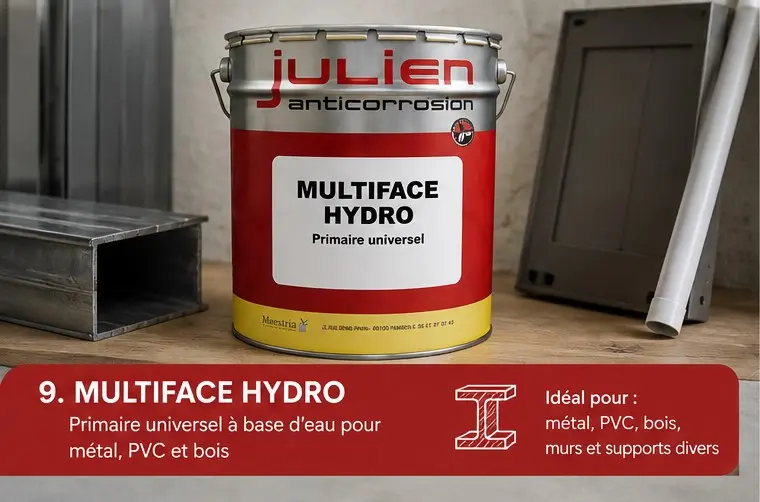
🚬 10. NORWAY
The stain specialist
NORWAY serves a very different function from standard primers. It is a multi-surface, stain-blocking insulating primer for walls and ceilings. It is specifically designed to block stains that might otherwise bleed through the new coat of paint. It can be used, in particular, to treat :
🚬 nicotine
🔥 soot
💧 some traces of moisture
🌳 tannins
🖊️ felt-tip pens and inks
👉 Why choose it ?
Do you have an old wall yellowed by smoke ? A soot mark ? A stain that keeps coming back despite several coats of paint ?
In this type of situation, a standard primer is not necessarily sufficient. You need to use a product designed to seal the stain before applying the finish
⚠️ NORWAY not suitable for all substrates: always check the technical data sheet before application.
🔗 NORWAY 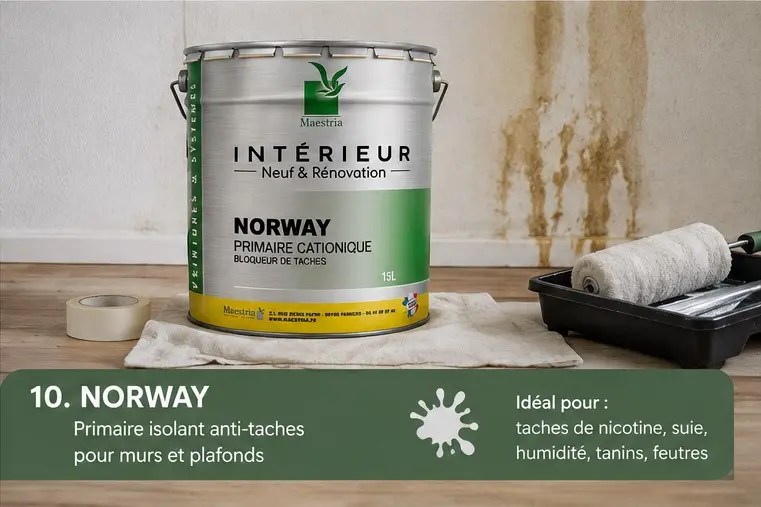
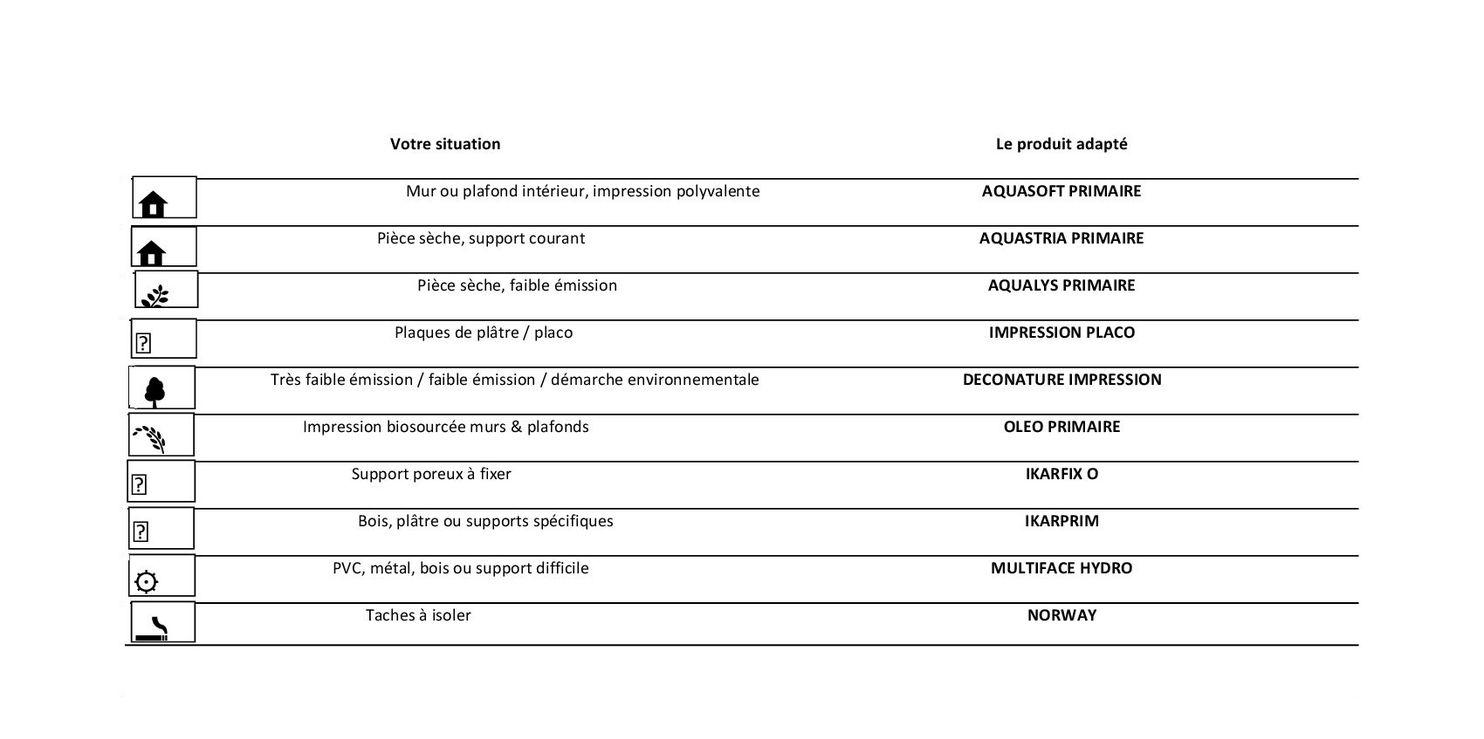
🧠 The summary table
❌ The most common mistakes
1️⃣ All undercoats are created equal
❌ False. A placo primer, a surface sealer, an adhesion primer, and a stain-blocking sealer do not serve the same function.
2️⃣ Apply a standard primer to a highly porous wall
❌ If the substrate needs to be consolidated, the appropriate product must be chosen.
3️⃣ Repaint directly over a stain
❌ A nicotine or soot stain may bleed through the finish. A suitable sealing system must be used.
4️⃣ Using a wall primer on PVC or metal
❌ The main issue is often adhesion. A primer suited to the substrate is required
5️⃣ Forgetting the placo joint tape
❌ Paint applied directly to poorly prepared plasterboard can result in an uneven finish. Using a suitable primer ensures a much more uniform surface.
6️⃣ Thinking that a primer replaces surface preparation
❌ No. The substrate must be clean, dry, sound, and properly prepared before applying the primer.
👉 Also check out our article: "Which paint to choose for renovating stained walls and ceilings ?"
👉 And "Which paint to choose for walls, ceilings, and rooms in the house ?"
"
❓ Frequently Asked Questions
Should you always apply a primer before painting ?
No. It depends on the substrate, its condition, the existing paint, and the chosen finishing system.
Which primer should I choose for placo ?
For plasterboard, IMPRESSION PLACO is specially formulated for this type of substrate and, in particular, regulates its absorption prior to finishing.
Which primer for a highly porous wall ?
When the substrate requires consolidation or sealing, a product such as IKARFIX O,a surface sealer,may be suitable.
Which primer for a stained wall ?
For stains likely to reappear, NORWAY is specifically designed as a stain-blocking primer.
Which undercoat for wood ?
The choice depends on the type of wood and the finishing system; IKARPRIM can notably be used on certain woods and substrates requiring a penetrating, hardening primer.
Which undercoat for PVC or metal ?
When adhesion is the primary issue, a multi-substrate primer such as MULTIFACE HYDRO should be considered, depending on the substrate and the finish.
What is the difference between a primer and a sealer ?
A primer generally prepares the substrate prior to the finishing coat. A sealer or stabilizer is intended specifically to consolidate or stabilize certain surfaces. Their functions are therefore not identical.
Can the same underlay be used throughout the house ?
Not necessarily. New placo, a porous wall, a stained wall, wood, and PVC all have different requirements. The surface itself should always dictate the choice of product.
🎯 In summary
When choosing your underlay, don't start by searching for "what is the best ?"
Start by asking: "What is my medium, and what problem do I need to solve ?"
👉 The right undercoat, therefore, is not a one-size-fits-all solution; it is the one that truly suits your specific surface.
📍 Need some advice ?
You are hesitating between several primers or undercoats ?
At Couleurs d'Argence in Lunel, we can help you identify the right product for your surface and your project.
🎨 Professional-grade paints MAESTRIA
📍 Couleurs d'Argence - Lunel
👉 Properly assessing the substrate before starting often helps avoid unpleasant surprises after painting.